





Product Overview

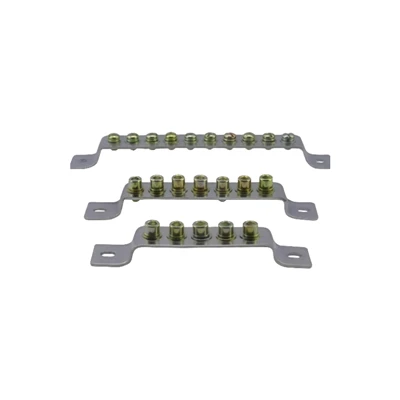
The Neutral Terminal 600A 35 To 95sqmm is a dedicated neutral (N) connection point for the heavy end of low-voltage distribution: switchgear line-ups, substation neutral bars, utility-scale photovoltaic and energy-storage AC combiner cabinets, and data-center main panels running three-phase four-wire systems.
Where a normal neutral strip is sized for branch circuits, this one is published at 600 A continuous duty, with a 36 kA one-second short-time withstand and a 72 kA peak withstand behind it. The reasoning is straightforward: on a large three-phase four-wire system the neutral carries the unbalanced current, and when that current has nowhere rated to go, the joint becomes the hottest point in the cabinet.
The conductor answers that with material rather than marketing. The bar is high-purity electrolytic copper at 99.9% Cu with 10 μm of tin plating, so a full-load joint stays close to its published 0.3 mΩ instead of growing an oxide film that turns every imbalance into heat.
Connections run from 35–95 mm² feeds on the inlet side down to 16–70 mm² branch conductors on the outlet side, all solid or stranded copper, clamped at 2.5–3.0 N·m onto a bar with pre-drilled mounting holes for direct switchgear installation.
Technical Specifications
The electrical rows below are this model's own published figures. The commercial rows at the bottom are series reference from pages already delivered in this range, because this page publishes none of them.
| Item | Specification |
|---|---|
| Function | Dedicated neutral (N) terminal block for three-phase four-wire systems |
| Rated Current | 600 A continuous duty - installation and ambient basis not published, see the production notes |
| Load Basis | 600 A is the rating of the terminal body fed at full size. Outlet positions take 16–70 mm² branches, each carrying only what its own conductor allows; no per-outlet figure is published, so confirm the branch loads you intend to quote |
| Rated Voltage | 400 V AC |
| Short-Time Withstand (Icw) | 36 kA for 1 second, per IEC 60947-1 |
| Peak Withstand (Ipk) | 72 kA |
| Inlet Wire Range | 35 mm² to 95 mm², solid or stranded copper |
| Outlet Wire Range | 16 mm² to 70 mm², solid or stranded copper |
| Conductor | High-purity electrolytic copper, 99.9% Cu |
| Electrical Conductivity | Above 98% IACS - briefed figure, confirm the test basis |
| Surface Finish | 10 μm tin plating over the copper |
| Contact Resistance | < 0.3 mΩ |
| Insulation Resistance | > 100 MΩ at 500 V DC |
| Dielectric Withstand | 3 kV AC for 1 minute |
| Insulation Material | Flame-retardant engineering plastic, UL94 V-0 |
| Screw Torque | 2.5 N·m to 3.0 N·m - screw size not published, confirm before quoting |
| Mounting | Direct mounting on switchgear busbars, pre-drilled holes |
| Standards | IEC 60947-1, IEC 60947-7-1, GB 7251.1 - see the production notes on the third item |
| Customization | Hole pattern, bar section and branch count produced to your drawing; OEM and ODM available on volume orders |
| MOQ | 10 pieces - series reference, confirm |
| Lead Time | 7 to 10 days standard; 15 to 20 days custom |
| Quality Guarantee | 12 to 24 months, counted from the shipment date |
| Manufacturing Standard | ISO 9001 quality management system |
| Packaging | Carton packed - series reference, confirm |
| Delivery Ports | Ningbo Port / Shanghai Port |
| Quote Turnaround | Within 24 hours of receiving the drawing |
Core Advantages
At 600 A a neutral joint is not a detail. Four points decide whether it stays cold.
Copper Purity You Can Verify
99.9% electrolytic copper and a conductivity above 98% IACS keep the bar's own resistance low, so the thick section runs at a modest current density instead of at its limit. A buyer can check both figures on the mill certificate.
A Published Short-Circuit Pair
36 kA for one second and 72 kA peak are stated as rated values against IEC 60947-1, not as adjectives. When a fault rides through a four-wire system, the neutral point is sized for the event rather than hoped through it.
Tin Where The Joint Is Made
The 10 μm plate sits on the contact faces, where bare copper would oxidise in humid industrial air and push the joint hotter month by month. This is the difference between a 0.3 mΩ connection on day one and the same figure at year five.
One Bar Instead Of A Loom Of Tails
Feeds from 35 to 95 mm² land once and leave as 16–70 mm² branches from the same body, replacing the tail-and-lug splices that a high-current neutral usually grows. Fewer splices at 600 A means fewer joints to torque, inspect and re-torque.
Wire Cage Terminal vs Traditional Brass Terminal
The title comes from the reference page; this product is a screw-clamped tinned copper bar, so the comparison below is bar against traditional brass strip. See production note 7.
| What Changes | This Tinned Copper Bar | Traditional Brass Neutral Strip |
|---|---|---|
| Conductor material | 99.9% electrolytic copper, above 98% IACS | Brass alloy, lower conductivity by composition |
| Current class | 600 A continuous, published | Usually unrated on the strip itself |
| Short-circuit withstand | 36 kA / 1 s and 72 kA peak, published | Rarely stated; sized by tradition |
| Contact faces | 10 μm tin plate over the copper | Bare brass, oxide-prone |
| Joint resistance | < 0.3 mΩ, published | Not published |
| Torque to apply | 2.5–3.0 N·m, published | Set by feel |
| Branch flexibility | 16–70 mm² outlets from one body | Fixed hole spacing, adapters needed |
Professional Production Process
Six steps, each closed out against a recorded value rather than an inspection glance.
Electrolytic copper bar arrives with mill certificates, and grade is verified before anything is cut.
Bar is sheared and punched to the drilling pattern; hole positions are gauged to the drawing, not eyeballed.
Contact faces are machined flat and deburred so a lug or branch conductor seats over its full area.
Degreased bars go through tin plating at the 10 μm call-up, with thickness sampled per batch.
Insulating supports are moulded in flame-retardant compound and held to UL94 V-0.
Every batch passes a resistance and dielectric check against the published 0.3 mΩ and 3 kV AC figures, filed under the batch number.
Material & Surface Treatment Options
Two decisions cost nothing on paper and a re-shipment in the field.
High-Purity Electrolytic Copper, 99.9% Cu
This is the grade behind the conductivity row and the mill certificate behind the grade. If your specification allows a lower-purity bar, say so on the drawing - otherwise the 99.9% figure stands and is testable.
Tin Plating At 10 μm
The published finish, chosen because it holds contact resistance in humid and corrosive industrial air. If your environment needs a heavier plate or a different coating, that is a drawing decision to settle before tooling, not a site discovery after.
Application Scenarios
Three places where an unrated neutral joint is a standing risk.
Switchgear And Substation Neutral Bars
Low-voltage switchgear line-ups and distribution substations, where the neutral bar sees the full unbalanced current of a four-wire system and needs the 600 A and 36 kA figures in writing for the panel's own documentation.
Utility-Scale PV And Storage AC Combiners
Combiner and energy-storage AC cabinets aggregate many strings into heavy feeds, and their neutral paths scale with them. A centralised N point with a published withstand keeps the AC side of the plant auditable.
Data Centers And Heavy Industrial Plants
Main distribution panels in data centers and large manufacturing facilities, where the neutral conductor works continuously near capacity and a hot joint is an outage waiting for a thermography scan to find it.
Frequently Asked Questions
Q: What does the 600 A rating actually cover?
A: It is the continuous-duty rating of the terminal body when fed at full size, on 35–95 mm² inlet conductors. Branch positions take 16–70 mm² and each carries only what its own conductor allows; no per-outlet figure is published, so send us the branch loads you intend to run and we confirm the fit before you order.
Q: How does it behave through a short circuit?
A: The published pair is 36 kA for one second and 72 kA peak, stated against IEC 60947-1. Those are rated withstand values for the terminal itself, so a fault cleared within a second arrives at a joint that was dimensioned for it.
Q: Why tin plating on a copper bar?
A: Bare copper grows an oxide film in humid industrial air, and an oxidised contact face is what turns a 0.3 mΩ joint into a warm one. The 10 μm plate sits on the contact faces, keeps the published resistance stable, and resists corrosion without adding meaningful resistance of its own.
Q: What conductors and torque does it take?
A: Solid or stranded copper at 35–95 mm² on the inlet and 16–70 mm² on the outlets, clamped at 2.5–3.0 N·m. The screw size behind that torque is not on the page, so confirm it with us and use a calibrated wrench on installation.
Q: Can it be built to our drawing, and how fast is a quotation?
A: Hole pattern, bar section and branch count are produced to your drawing, with OEM and ODM available once volume justifies it. Standard builds leave in 7–10 days and custom ones in 15–20. Send the drawing and a quotation comes back within 24 hours.

Hot Tags: neutral terminal 600a 35 to 95sqmm, China neutral terminal 600a 35 to 95sqmm manufacturers, suppliers, factory, Neutral Busbar 3x30 10Pole, neutral busbars, Neutral Terminal 250A 16 To 50sqmm, Neutral Terminal 400A 25 To 70sqmm, Standalone Neutral Terminal 100A 10 To 35sqmm, Standalone Neutral Terminal 600A 35 To 95sqmm