








What is the fatigue resistance of China cable glands?
As a supplier of China cable glands, I have witnessed firsthand the significance of fatigue resistance in cable gland products. Cable glands play a crucial role in protecting electrical cables, ensuring a secure connection, and preventing environmental factors from damaging the cables. Fatigue resistance, in this context, refers to the ability of cable glands to withstand repeated stress and strain over time without failing.
Understanding the Concept of Fatigue Resistance
In the field of materials science and engineering, fatigue is defined as the progressive and localized structural damage that occurs when a material is subjected to cyclic loading. For cable glands, cyclic loading can come from various sources, such as vibration, thermal expansion and contraction, and mechanical shocks. When a cable gland experiences fatigue, it may develop cracks, lose its sealing properties, or even break completely, which can compromise the safety and functionality of the entire electrical system.
The fatigue resistance of a cable gland is determined by several factors, including the material used, the design of the gland, and the manufacturing process. Different materials have different fatigue properties. For example, metals like stainless steel and brass are known for their high strength and good fatigue resistance, while plastics such as nylon can also offer decent fatigue performance under certain conditions.
Materials and Fatigue Resistance
Nylon Cable Glands
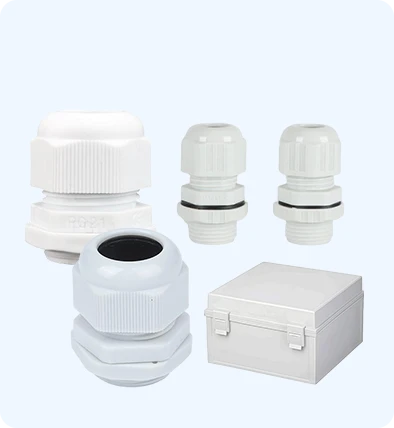
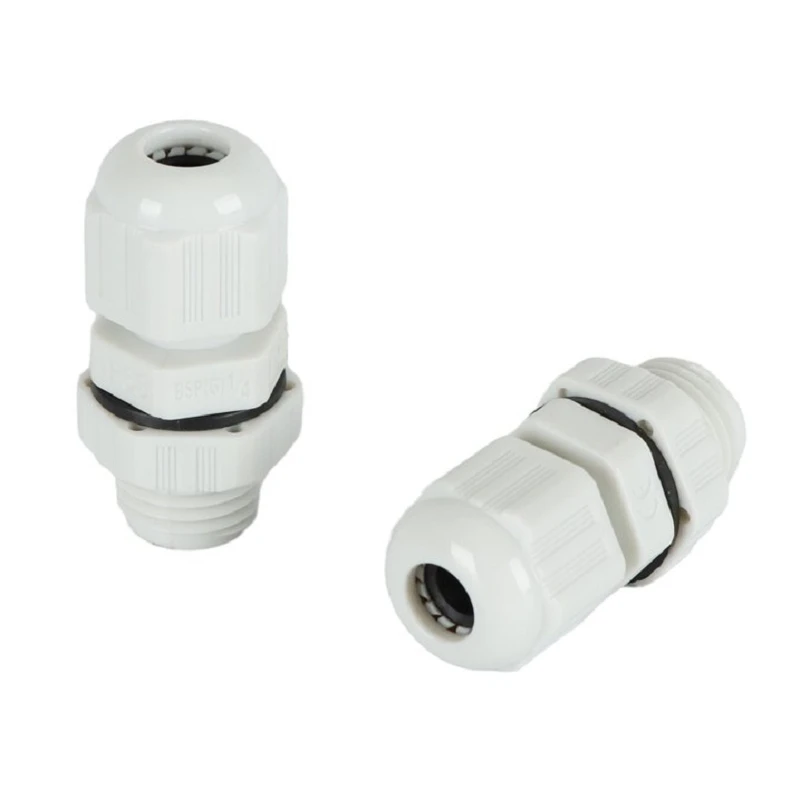
Nylon is a popular material for cable glands due to its lightweight, corrosion - resistant, and cost - effective nature. Our Nylon Cable Gland PG11, Nylon Cable Gland PG21, Nylon Cable Gland Metric M20, Nylon Cable Gland Metric M12, and Nylon Cable Gland Metric M25 are designed to provide reliable fatigue resistance.
Nylon has a certain degree of elasticity, which allows it to absorb and distribute stress during cyclic loading. However, its fatigue resistance can be affected by factors such as temperature and moisture. At high temperatures, nylon may become softer and more prone to deformation, reducing its fatigue life. Moisture can also cause nylon to swell, which may lead to changes in its mechanical properties and reduce its ability to withstand cyclic stress.
To enhance the fatigue resistance of nylon cable glands, we use high - quality nylon materials and employ advanced manufacturing techniques. Our nylon cable glands are engineered with precise dimensions and proper wall thicknesses to ensure optimal stress distribution. Additionally, we conduct extensive testing to ensure that our products can meet the required fatigue performance standards in different environments.
Metal Cable Glands
Metal cable glands, such as those made of stainless steel or brass, generally offer higher fatigue resistance compared to nylon. Stainless steel is known for its excellent corrosion resistance and high strength. It can withstand a large number of stress cycles without significant damage. Brass is also a popular choice due to its good electrical conductivity and moderate strength.
The design of metal cable glands is often optimized to enhance their fatigue resistance. For example, the shape of the gland, the number and size of the threads, and the connection method all play important roles in determining how well the gland can withstand cyclic loading. Our metal cable glands are carefully designed and manufactured to ensure maximum fatigue performance, even in harsh industrial environments.
Design Considerations for Fatigue Resistance
In addition to the choice of materials, the design of cable glands also has a significant impact on their fatigue resistance. A well - designed cable gland should be able to distribute stress evenly across its structure, minimizing the risk of stress concentration.
One of the key design elements is the shape of the gland. A smooth and rounded shape can help to reduce stress concentration points compared to a sharp - edged design. The thread design is also crucial. Properly designed threads can ensure a secure connection between the gland and the cable, as well as between the gland and the enclosure. They can also help to distribute the load evenly during cyclic loading.
Another important design consideration is the sealing mechanism. A good sealing design not only prevents environmental factors from entering the cable, but also helps to maintain the structural integrity of the gland. For example, a well - designed O - ring seal can absorb some of the stress during cyclic loading, reducing the impact on the gland itself.
Manufacturing Process and Fatigue Resistance
The manufacturing process of cable glands can also affect their fatigue resistance. Precise manufacturing techniques ensure that the dimensions of the gland are accurate, which is essential for proper stress distribution.
For plastic cable glands, processes such as injection molding need to be carefully controlled. The temperature, pressure, and cooling rate during injection molding can all affect the mechanical properties of the nylon. If the process is not properly controlled, the nylon may have internal defects, such as voids or uneven material distribution, which can reduce its fatigue resistance.
For metal cable glands, manufacturing processes like forging and machining also play important roles. Forging can improve the density and strength of the metal, enhancing its fatigue performance. Machining operations need to be carried out with high precision to ensure that the threads and other critical features are accurately formed.
Testing and Quality Assurance
To ensure the fatigue resistance of our China cable glands, we conduct rigorous testing. We use specialized testing equipment to simulate different cyclic loading conditions, such as vibration and thermal cycling. Our testing procedures are based on international standards, such as the standards set by the International Electrotechnical Commission (IEC).
During the testing process, we measure various parameters, such as the number of cycles before failure, the deformation of the gland, and the integrity of the seal. If a product fails to meet our quality standards, it will not be released to the market.
Applications and Fatigue Resistance Requirements
The fatigue resistance requirements of cable glands vary depending on their applications. In the aerospace industry, cable glands need to withstand extreme vibration and mechanical shocks during flight. Therefore, high - strength materials and excellent fatigue - resistant designs are essential.
In the industrial sector, such as in manufacturing plants and refineries, cable glands are often exposed to continuous vibration from machinery and thermal cycles due to temperature variations. These environments require cable glands that can maintain their performance over long periods of time.
In the marine industry, cable glands are exposed to harsh salt - water environments, which can cause corrosion in addition to the cyclic loading from waves and vessel movement. Our cable glands are designed to meet the specific fatigue resistance and corrosion - resistance requirements of these different applications.
The Importance of Good Fatigue Resistance
Good fatigue resistance in cable glands is essential for several reasons. Firstly, it ensures the safety of the electrical system. A cable gland with poor fatigue resistance may fail over time, leading to cable damage, electrical short - circuits, or even fires.
Secondly, it reduces maintenance costs. Cable glands with high fatigue resistance can last longer, reducing the need for frequent replacements. This not only saves money on replacement parts but also reduces downtime for maintenance.
Finally, it enhances the reliability of the entire system. In applications where uninterrupted operation is critical, such as in power generation and telecommunications, reliable cable glands are crucial for maintaining the stability of the system.
Conclusion
As a supplier of China cable glands, we understand the importance of fatigue resistance in our products. We use high - quality materials, advanced design concepts, and precise manufacturing processes to ensure that our cable glands can provide excellent fatigue performance in various applications.
If you are looking for reliable cable glands with high fatigue resistance, feel free to contact us for further information and discuss your specific requirements. Our team of experts is ready to assist you in finding the most suitable cable gland solutions for your projects.

References
- International Electrotechnical Commission (IEC) standards on cable glands.
- Textbooks on materials science and engineering related to fatigue and mechanical properties of materials.
- Industry research reports on cable gland applications and performance requirements.


