





Product Overview

A heavy-duty T-branch for 95 mm² main cable that is never cut and never stripped.
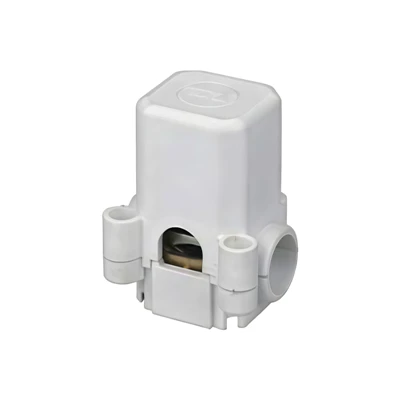
Cable T Connector 95sqmm taps a 95 mm² main cable without cutting it. The main conductor is laid into the lower channel exactly as it was pulled, the upper housing closes over it, and two hex bolts drive the piercing contacts through the insulation. Nothing about the main run changes: no cut, no stripped end, no crimp lug, no tape.
That matters most where the joint will not be inspected again. On a buried distribution feeder or a plant trunk line, a stripped 95 mm² conductor has to be sealed by hand, and a hand-made seal on a cable this size is where moisture gets in.
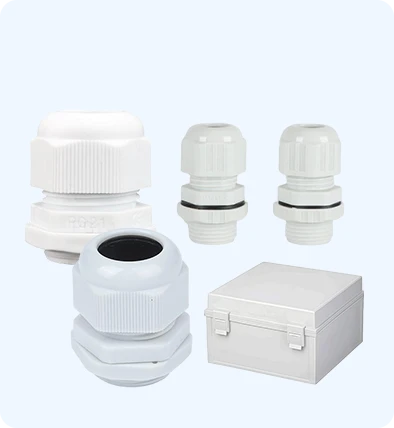
Water reaching that conductor ends as an earth fault on the feeder, and finding it means opening the ground again. Here the only stripped copper is the branch tail, closed inside the housing; an optional weatherproof protection box covers the whole assembly for direct burial or a pole base.
Ratings follow the conductor. The main port takes 95 mm² copper, the branch port takes 25 mm² to 95 mm², and the tap is rated up to 300 A subject to the ampacity of the cable it is fitted to. Insulation resistance is at least 500 MΩ and the assembly withstands 3 kV AC for one minute.
Technical Specifications
Standard configuration for the 95 mm² T-branch. Confirm each line against your cable construction and site conditions before release.
| Parameter | Value |
|---|---|
| Configuration | Three-way T-branch, insulation-piercing bolt clamp; main cable left uncut and unstripped |
| Main Cable Size | 95 mm² (Cu) - the opening line of the source page also mentions aluminium main cables, confirm which is qualified |
| Branch Cable Range | 25–95 mm² (Cu) |
| Branch Strip Length | Approximately 18–22 mm of insulation from the branch cable end |
| Rated Current | Up to 300 A, set by the ampacity of the conductor the tap is fitted to - a main-side figure |
| Pull-Out Force, Main Port | ≥ 1500 N |
| Pull-Out Force, Branch Port | ≥ 800 N |
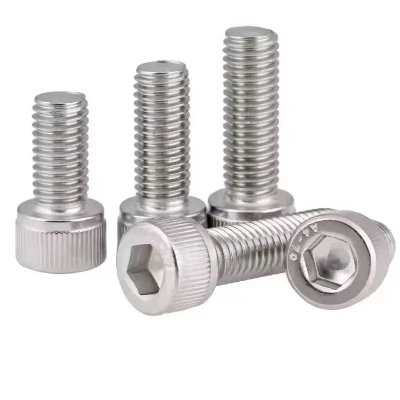
| Clamping Bolts | Two hex bolts, tightened alternately to seat the piercing contacts evenly |
| Installation Torque | 25–30 N·m for 95 mm² |
| Insulation Resistance | ≥ 500 MΩ |
| Dielectric Withstand | 3 kV AC for 1 minute |
| Conductor Contact | Tin-plated copper alloy - series reference from the 50 mm² page on this site, confirm for this size |
| Rated Voltage | Not published for this size; the 50 mm² page quotes 1000 V AC / 1500 V DC - confirm |
| Operating Temperature | Not published for this size; the 50 mm² page quotes −40 °C to +120 °C - confirm |
| Housing | Not published for this size - confirm material and flame rating |
| Protection Box (Optional) | UV-stabilized polypropylene (PP) or PC/ABS blend |
| Box Protection Rating | IP65 / IP67 - the source page opening line claims IP68; reconcile before publishing (see Appendix B) |
| Box Dimensions | Sized around the connector with cable bend-radius allowance |
| Box Mounting | Wall-mount, or direct burial with appropriate backfill |
| Design Reference | IEC 61238-1 / EN 50483-4 - the standards buyers check for an insulation-piercing branch connector; no standard is cited on the source page, name one only when the report is held |
| Customization | OEM / ODM per customer drawings, including branch port count and body marking |
| MOQ | Depends on configuration; trial orders negotiable |
| Quality Guarantee | 12–24 months from shipment date |
| Manufacturing Standard | ISO 9001 quality management system |
| Packaging | Standard export packaging |
| Delivery Ports | Ningbo Port / Shanghai Port |
| Quote Turnaround | Within 24 hours |
Core Advantages
Four points decide whether a 95 mm² tap is still sound after ten years in the ground.
The main conductor keeps its own extruded insulation over its whole length, so no hand-made seal sits over stripped copper. The branch tail is the only bare conductor, and it is closed inside the housing under the optional protection box. On a buried feeder that is the difference between a joint and a fault waiting for the wet season.
The clamp does not depend on a die and a crimping tool that may not be on site. Two hex bolts tightened alternately to 25–30 N·m drive the piercing contacts into the main insulation and hold them, with the main port taking at least 1500 N before the conductor moves.
Because nothing is cut and nothing is re-terminated, the feeder keeps the continuity it was designed with, and the branch does not add a joint that has to be listed and maintained. The tap can be made in a trench or a panel without shutting the whole run down.
The branch side accepts 25 mm² to 95 mm², so a heavy sub-main and a light control feed use the same connector, and a crew carries one part instead of a set of lugs. Strip the tail to 18–22 mm, insert it until it meets the conductive insert, and torque the bolts.
Wire Cage Terminal vs Traditional Brass Terminal
The heading is kept from the approved template. The comparison below is written for this product's bolt-clamp, insulation-piercing interface.
| Point Of Comparison | Bolt-Clamp T-Branch (This Connector) | Traditional Brass Terminal With A Cut Joint |
|---|---|---|
| Main conductor | Left uncut and unstripped; the contacts pierce the insulation | Cut, stripped at both ends and re-terminated |
| Joints added to the feeder | None | One bolted or crimped joint for every tap |
| Watertightness | Sealed housing plus optional protection box at IP65 / IP67 | Depends on the tape or sleeve the crew applies by hand |
| Behaviour in wet ground | No stripped main conductor for water to reach | Water tracks into the joint and faults to earth |
| Tightening | Two hex bolts at 25–30 N·m, pull-out ≥ 1500 N | Torque set per lug, per tool, per crew |
| Work at the tap | Position, close, torque once | Cut, strip, crimp, insulate, then box |
| Re-opening the tap | The branch port is accessible without touching the main run | The joint has to be cut out and remade |
Professional Production Process
Five stages, with the electrical results recorded per batch.
Contact forming - bar stock cut and formed to the drawing for the 95 mm² main channel.
Moulding - connector bodies and protection boxes moulded in the UV-stabilized PP or PC/ABS blend specified for the box.
Hardware - hex bolts and locking clips produced to the torque the assembly is rated for.
Assembly - main channel, branch port and piercing contacts aligned and seated in one fixture.
Routine test - insulation resistance at or above 500 MΩ, dielectric withstand at 3 kV AC for one minute, and pull-out sampling on both ports.
Material & Surface Treatment Options
Two material decisions are worth settling before the order goes in.
Conductive Piercing Insert
Once the insert has penetrated the main insulation it carries the whole branch current, so its material sets the contact resistance and the corrosion behaviour in wet ground. The source page names it only as a conductive insert; the 50 mm² page on this site specifies tin-plated copper alloy. Confirm the material and plating for this size before release.
UV-Stabilized PP Or PC/ABS Protection Box
The optional box is moulded in UV-stabilized polypropylene or a PC/ABS blend, so it holds its shape and colour outdoors and in a trench. It is sized around the connector with cable bend-radius allowance, and mounts on a wall or goes into the ground with appropriate backfill.
Application Scenarios
Three places where a 95 mm² branch is normally the expensive part of the job.
Buried Urban Distribution Cable
Municipal low-voltage feeders where a branch has to leave the main cable without cutting it. Nothing is re-terminated underground, and the protection box carries the joint through direct burial with backfill instead of a hand-made seal over stripped copper.
Heavy-Industry Plant Trunk Lines
Plant main distribution panels and long trunk runs where a branch has to be taken without breaking the feeder. The main conductor is not disturbed, no joint is added to the run, and the connection is made with one torque pass at the tap.
Street Lighting And Temporary Feeds
Pole-base taps on lighting circuits and temporary construction power, where the same connector is recovered and refitted. The main channel re-opens, the branch tail is re-stripped to 18–22 mm, and the unit goes back on the next job.
Frequently Asked Questions
Q: Does the main cable have to be cut or stripped?
A: Neither. The main conductor is laid into the channel exactly as it was pulled, and the two hex bolts drive the piercing contacts through its insulation. Only the branch conductor is stripped, to roughly 18–22 mm, before it goes into the side port.
Q: What torque should the bolts be set to, and how is the joint verified?
A: 25–30 N·m for 95 mm², applied to the two hex bolts alternately so the contacts seat evenly. Pull gently on both cables afterwards: the assembly is rated for at least 1500 N on the main port and 800 N on the branch port.
Q: How is a buried joint kept watertight?
A: The main conductor keeps its own insulation, so no hand-made seal sits over stripped copper. For outdoor or buried work the optional protection box is rated IP65 / IP67 and mounts on a wall or goes in with appropriate backfill. The source page opening line claims IP68 for the connector; if you need that underground, tell us the design depth and duration and we will confirm it, because IEC 60529 leaves both to the manufacturer and the user to agree.
Q: What are the electrical ratings for this size?
A: Up to 300 A, set by the ampacity of the conductor the tap is fitted to rather than by the connector itself. Insulation resistance is at least 500 MΩ, and the assembly withstands 3 kV AC for one minute, over a branch range of 25 mm² to 95 mm².
Q: Do you support customization, and what is the MOQ?
A: Branch port count, body marking and protection-box supply can be produced to your drawing under OEM or ODM terms. MOQ depends on the configuration and any tooling involved, and trial orders for a project are negotiable. Send the main cable size, the branch sizes and count per joint, the installation environment and the target quantity for a quotation within 24 hours.


Hot Tags: cable t connector 95sqmm, China cable t connector 95sqmm manufacturers, suppliers, factory, Cable T Connector 50sqmm, Cable T Connector 95sqmm, Enclosed Distribution Block 6x16sqmm, Metering Box Outlet Block 2 Gear, other terminals and accessories, t connectors and blocks