







Why Industrial and Outdoor Applications Demand Premium Waterproof Enclosures and Cable Glands
Electrical and electronic equipment deployed in industrial, outdoor, and infrastructure environments faces an unrelenting assault from moisture, dust, chemical contaminants, UV radiation, and mechanical impacts. Unlike indoor installations in climate-controlled buildings, outdoor and harsh-environment applications offer no natural protection to sensitive electrical connections. This is precisely where waterproof enclosures, plastic enclosures, and cable glands become mission-critical components - not optional accessories, but engineered protection systems that determine the reliability and service life of the entire installation.
Consider the power distribution network. Every utility pole-mounted metering box, every ground-level cable junction, every solar array combiner box is an installation point where water ingress can cause short circuits, corrosion, insulation failure, and ultimately power outages. A single compromised seal at a cable entry point can allow moisture to penetrate an enclosure, leading to terminal corrosion, tracking across insulation surfaces, and catastrophic failure during the next rainstorm. The cost of a quality waterproof enclosure - perhaps $15 to $50 per unit - is dwarfed by the cost of a single emergency repair call-out, not to mention the reputational damage of a service interruption.
Telecommunications infrastructure presents equally demanding requirements. Outdoor fiber-optic splice closures, 5G base station equipment cabinets, and roadside communications cabinets must maintain IP65 or IP66 protection continuously for 15 to 20 years with minimal maintenance. These installations often feature complex cable entries - dozens of cables entering through multiple points - making cable gland selection and installation quality equally critical as the enclosure itself. A single improperly installed cable gland defeats the IP rating of even the best enclosure.
Renewable energy installations - solar PV arrays, wind turbines, battery energy storage systems - operate in some of the most exposed environments on earth. Solar combiner boxes on rooftop arrays face continuous UV exposure, thermal cycling from -20°C to +80°C, and driving rain. Wind turbine nacelle enclosures endure constant vibration and salt spray in offshore installations. Battery storage containers require IP55 minimum protection for safety-critical monitoring and control wiring. In all these applications, the enclosure and cable gland system must maintain its protection rating throughout the equipment's 25-year design life.
Infrastructure projects - tunnels, bridges, railways, water treatment plants - require enclosures that resist not only water but also chemical attack from de-icing salts, exhaust fumes, and industrial effluents. Tunnel lighting junction boxes must withstand high-pressure washdowns during maintenance. Railway trackside equipment enclosures face ballast impact, vibration from passing trains, and extreme temperature variations. Water treatment plant enclosures must resist chlorine, hydrogen sulfide, and other corrosive gases while maintaining electrical protection for instrumentation and control wiring.
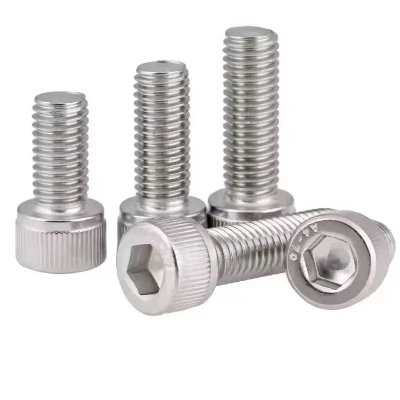
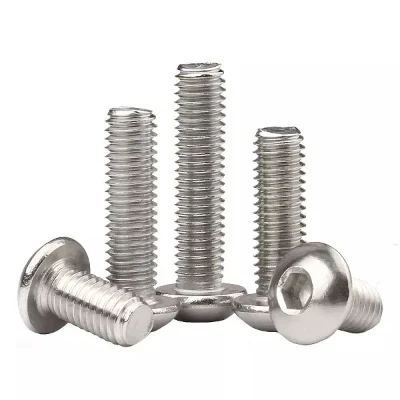
For B2B buyers procuring enclosures and cable glands for these applications, the specification process must consider the complete protection system - not just the enclosure box but also the cable glands, blanking plugs, ventilation filters, and mounting hardware that together determine the real-world IP performance. A system approach to specification, rather than component-by-component procurement, ensures compatibility, simplifies certification, and provides single-source accountability for protection performance.
Material Engineering: Flame-Retardant Polycarbonate (PC) vs. ABS vs. Metal - Performance Comparison for Electrical Enclosures
The choice of enclosure material directly determines the protection level, durability, weight, cost, and application suitability of the final installation. For B2B buyers evaluating waterproof enclosures and plastic enclosures, understanding the material engineering trade-offs is essential for making optimal specification decisions. This section provides a detailed comparison of the three primary material families used in industrial electrical enclosures.
Flame-retardant polycarbonate (PC) has become the dominant material for high-performance electrical enclosures across global markets. The material's advantages are multifaceted: it achieves UL 94 V-0 flame rating (self-extinguishing), offers exceptional impact resistance (up to 250 times that of glass at equivalent thickness), maintains mechanical properties across a wide temperature range (-40°C to +130°C continuous), and resists UV degradation when formulated with stabilizers. PC enclosures can be molded into complex shapes with integrated cable entry points, mounting features, and internal organizer ribs - reducing assembly time and component count. The material's inherent transparency (in natural grade) enables inspection windows, while pigmented grades provide color-coding for different voltage levels or system functions. Advanced PC formulations achieve CTI (Comparative Tracking Index) values above 600V, ensuring insulation integrity in contaminated environments. For applications requiring RFI/EMI shielding, metallized PC grades or internal conductive coatings are available.
ABS (Acrylonitrile Butadiene Styrene) is a lower-cost alternative that offers good impact resistance and ease of processing. ABS enclosures are widely used in indoor applications, light-commercial installations, and consumer-facing products where cost optimization is prioritized. However, ABS has significant limitations for industrial and outdoor use: standard ABS carries only a UL 94 HB flame rating (burns slowly), degrades rapidly under UV exposure without expensive stabilizer packages, and has a lower continuous use temperature (~80°C) compared to PC. Flame-retardant ABS grades (UL 94 V-0) are available but at a cost premium that narrows the price gap with PC while still offering inferior UV and temperature performance. For B2B buyers, ABS enclosures are appropriate for controlled indoor environments but should be avoided for outdoor, industrial, or safety-critical applications.
Metal enclosures - typically sheet steel (carbon or stainless) or die-cast aluminum - offer the highest mechanical strength and inherent EMI shielding. Steel enclosures are preferred for heavy-industrial applications requiring IK10 impact protection, for hazardous-area installations requiring flameproof (Ex d) certification, and for large equipment cabinets requiring structural rigidity. Stainless steel enclosures serve food processing, marine, and pharmaceutical applications where hygiene and corrosion resistance are paramount. However, metal enclosures carry significant disadvantages for many applications: they are heavier (increasing shipping and installation costs), more expensive (particularly stainless steel), susceptible to corrosion if coatings are damaged, and thermally conductive (creating condensation risks in temperature-cycling environments). Metal enclosures also require additional insulation components for personnel protection in high-voltage applications.
The performance comparison becomes clear when applied to specific scenarios. For outdoor power metering and distribution boxes, flame-retardant PC enclosures offer the optimal balance of weather resistance, electrical insulation, weight, and cost. For indoor industrial control panels in clean environments, ABS may be acceptable where cost is the primary driver. For heavy-industrial or hazardous-area applications, metal enclosures remain the standard despite their cost and weight penalties.
For buyers specifying enclosures across multiple application types, a mixed-material strategy is often optimal: PC enclosures for outdoor and electrical safety applications, ABS enclosures for indoor commercial installations, and steel enclosures for heavy-industrial or hazardous-area requirements. Manufacturers like Lingcheng Electric, who specialize in flame-retardant PC enclosures with deep material expertise and multiple product lines, serve as ideal partners for the PC enclosure component of this mixed strategy - providing product depth, quality consistency, and OEM customization capability.
Cable Glands: Types, IP Protection Levels, and Installation Best Practices for Complete Sealing Systems
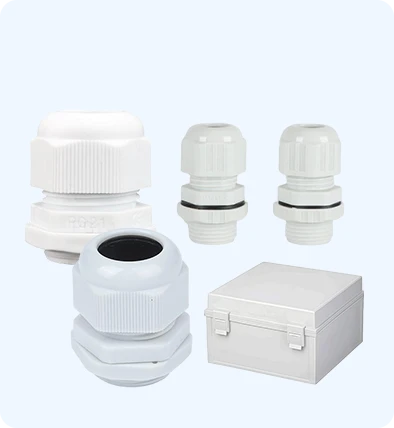
Cable glands - also known as cable connectors, cord grips, or cable fittings - are the critical interface between a cable and the enclosure it enters. They perform three simultaneous functions: mechanical cable retention (preventing the cable from being pulled out under tension), environmental sealing (maintaining the enclosure's IP rating at the cable entry point), and strain relief (preventing cable movement from stressing internal connections). Despite their small size and modest cost, cable glands are the single most common point of failure in outdoor electrical installations - and the most overlooked during specification and procurement.
The two primary cable gland designs used in industrial applications are compression-type glands and push-fit (quick-connect) glands. Compression-type glands use a threaded body and compression nut to squeeze a neoprene or silicone seal around the cable, creating a gas-tight and water-tight seal. They offer the widest cable acceptance range, the highest IP ratings (up to IP68 for submersion-rated variants), and the most reliable long-term sealing performance. Compression glands are available in metallic (nickel-plated brass, stainless steel) and non-metallic (PA, PVDF, flame-retardant PC) materials to match the enclosure material and application environment. For flame-retardant PC enclosures, non-metallic PC cable glands provide material compatibility, consistent UV/weathering performance, and simplified procurement from a single-source supplier.
Push-fit cable glands offer faster installation - simply push the cable through the seal and the gland locks automatically. They are preferred in high-volume installations where labor cost dominates total installed cost, such as telecom cabinets with dozens of cable entries. However, push-fit glands typically offer lower IP ratings (IP54 to IP66) and narrower cable acceptance ranges compared to compression types. They are ideal for controlled applications with consistent cable diameters but less suitable for field installations where cable sizes may vary.
IP protection levels for cable glands follow the same IEC 60529 standard as enclosures. IP65-rated glands resist dust ingress and water jets - adequate for most outdoor applications. IP66 glands offer enhanced water jet resistance for high-exposure locations. IP67 glands resist temporary submersion - used in flood-prone areas and underground vaults. IP68 glands resist continuous submersion at specified depths and durations - required for marine and water-industry applications. The cable gland IP rating must equal or exceed the enclosure IP rating; otherwise, the gland becomes the weak link in the protection system.
Installation best practices are as important as product selection. The cable entry hole must be the correct size for the gland - neither too large (reducing seal compression) nor too small (damaging the seal during insertion). The cable outer diameter must fall within the gland's specified clamping range - using a gland that is too large for the cable leaves a gap in the seal. For armored cables, the armor must be properly clamped by the gland's armor clamp to ensure both mechanical retention and electrical continuity of the armor to the enclosure. After installation, each cable entry should be inspected for proper seal compression and the enclosure should be tested for IP integrity - particularly in critical installations.
For B2B buyers procuring cable glands in volume, compatibility with the enclosure system is a key consideration. Glands and enclosures from the same manufacturer ensure dimensional compatibility, material compatibility (UV stability, thermal expansion coefficients), and single-source warranty coverage. Manufacturers like Lingcheng Electric, who produce both waterproof enclosures and cable glands in flame-retardant PC, offer matched systems that eliminate compatibility uncertainty and simplify procurement.
Wholesale Sourcing Guide - Choosing an Enclosure Manufacturer with Global Certifications, OEM Molding Capability, and Scalable Production
The global market for electrical enclosures and cable glands is valued at billions of dollars, served by manufacturers ranging from small workshops to multinational corporations. For B2B buyers - electrical wholesalers, panel builders, EPC contractors, and utility procurement teams - selecting the right enclosure manufacturer requires evaluating a combination of technical capability, certification portfolio, production scalability, and commercial flexibility. This section provides a structured framework for that evaluation.
Global certifications are the entry ticket to international markets. A manufacturer must hold, at minimum, CE marking (for European market access), ISO 9001 (for quality system assurance), and relevant product testing per IEC standards (IEC 62444 for cable glands, IEC 60529 for IP ratings, IEC 62262 for IK impact ratings). For North American market access, UL recognition per UL 50E (Enclosures for Electrical Equipment) or UL 1598 (for luminaires, if applicable) is typically required. RoHS compliance is mandatory for European market and increasingly demanded globally. Manufacturers maintaining CCC, CE, UL, and RoHS certifications simultaneously - like Lingcheng Electric - can serve buyers with multi-market distribution requirements from a single production source, eliminating the need for multiple supplier qualifications.
OEM molding capability is a critical differentiator for buyers requiring custom enclosures. The ability to design, tool, and produce custom injection molds in-house dramatically reduces the time and cost of custom enclosure development. A manufacturer with in-house mold design engineers and CNC machining capability can go from customer concept to production-ready enclosure in 30 to 45 days - compared to 60 to 90 days when mold design is outsourced. For B2B buyers with proprietary enclosure designs or branding requirements (custom colors, embossed logos, unique cable entry configurations), in-house molding capability is essential. Lingcheng Electric's 12+ patents reflect a track record of successful custom mold development and proprietary product innovation.
Scalable production ensures the manufacturer can grow with the buyer's business. A factory with 7 production lines and 4,500 square meters of production space, like Lingcheng Electric's facility, can handle both small prototype runs (50-100 pieces) and large production orders (50,000+ pieces) without quality compromise. The key is to verify that quality systems scale with volume - that statistical process control, incoming material inspection, and final audit sampling are maintained at high volumes, not just during low-volume sampling. Buyers should request production capacity data and quality metrics (defect rates, Cpk values) to validate scalable quality.
Commercial flexibility is particularly important for wholesalers and distributors who manage diverse inventories. Manufacturers who offer mixed-SKU ordering (combining different enclosure sizes, types, and colors in a single order to meet MOQ) provide significant inventory management advantages. Just-in-time delivery programs, consignment stock arrangements, and blanket order scheduling are additional commercial services that mature manufacturers offer to strategic B2B partners. These services reduce the buyer's inventory carrying costs while ensuring product availability for their own customers.
Technical support quality should be evaluated throughout the sourcing process - from initial inquiry responsiveness through post-delivery technical service. Manufacturers who provide CAD files, technical datasheets, installation guides, and responsive engineering support (email, video, on-site) reduce the buyer's own technical support burden. A 12 to 24-month warranty on enclosures and cable glands signals the manufacturer's confidence in product quality and provides the buyer with risk protection against latent manufacturing defects.
In summary, B2B buyers sourcing waterproof enclosures, plastic enclosures, and cable glands should prioritize manufacturers who combine: global certifications for market access, OEM molding capability for customization, scalable production for growth support, and commercial flexibility for inventory optimization. These criteria, applied systematically, identify manufacturers who can serve as true supply chain partners - not just component vendors.
Keywords Used in This Article
Core Keywords: Waterproof Enclosures, Plastic Enclosures, Cable Glands, IP65/IP67 waterproof box, flame retardant PC enclosure, bulk cable glands supplier, electrical enclosure manufacturer, outdoor electrical enclosure
B2B/Commercial Keywords: wholesale waterproof enclosures, bulk cable glands China, OEM enclosure manufacturer, custom plastic enclosure supplier, electrical enclosure factory, IP66 enclosure wholesale, industrial enclosure distributor
Related/LSI Keywords: polycarbonate enclosure, IP68 cable gland, compression cable glands, non-metallic cable glands, UL 50E enclosure, IEC 62444 cable glands, IEC 60529 IP rating, IK impact rating, solar combiner box enclosure, telecom outdoor cabinet, NEMA enclosure, ABS vs PC enclosure, flame-retardant enclosure, outdoor junction box, cable entry gland, strain relief cable gland


