








Products Description

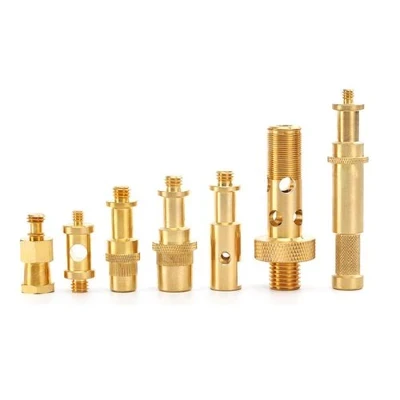
Selecting a tubular rivet goes far beyond its outer dimensions-it is primarily about how the fastener behaves during the setting operation. The hollow portion must roll over or expand uniformly without any cracking, while the formed head needs to hold securely against the mating surface. These miniature brass rivets are engineered exactly for that purpose: delivering controlled, repeatable collapse in small-scale assemblies where a standard screw would either consume too much space or introduce extra production steps. Unlike common long semi-tubular rivets, our design focuses on tight regulation of bore depth and wall thickness, ensuring that installation behavior matches your exact joint requirements every time.
Brass and copper alloys are chosen here for their superior cold-forming characteristics and inherent corrosion resistance. They also offer a wide variety of surface aesthetics-from bright natural tones to polished or plated finishes-so the fastener can be functional and visually compatible with the final product.
Two rivets sharing the same shank diameter can perform completely differently once you alter the bore depth, wall thickness, or material temper. The final design must be balanced against the total thickness of the components being joined and the specific riveting tool employed. Controlling these internal geometries is what determines whether the rivet rolls cleanly, grips tightly, or fails prematurely. This is particularly critical in delicate micro-assemblies where margin for error is minimal.


Dimensional Specifications for Quotation
When preparing a custom enquiry, the following parameters define the rivet geometry and its interaction with your assembly:
Head Diameter – Maximum diameter across the formed head
Head Height – Vertical distance from the top of the head to the shoulder
Shank Diameter – Outside diameter that enters the assembly hole
Bore Diameter – Internal hole diameter
Bore Depth – Can be fully hollow through the shank or machined to a specified partial depth
Wall Thickness – Difference between the shank outside diameter and the bore diameter
Shank Length – Total length below the head
Material Stack – Combined thickness of all parts being joined
Setting Allowance – Extra shank length needed to form the clinch or roll
Edge Radius – Condition of the head and shank edges
Material, Finish, and Manufacturing Options
Base Material
Brass, copper, or a specified copper alloy.
Material Condition
Selected according to the required formability during setting.
Rivet Style
Hollow, semi-tubular, or custom geometry defined by your drawing.
Head Form
Flat, round, low-profile, or any bespoke contour.
Surface
Natural, polished, nickel plated, tin plated, or a custom finish tailored to your application.
Production Route
Cold forming, precision turning, or a combined process depending on volume and complexity.
Inspection
Verification covers critical dimensions, bore depth, and overall visual condition.
Supply Method
Loose packed, counted in sealed bags, or arranged in custom packaging.

Pre-Production Recommendations
To achieve a reliable joint, please provide the assembly hole diameter, total material stack thickness, and the intended setting technique. When the visual appearance of the clinch, pull-out resistance, or the exact deformation profile is important, we strongly advise running a riveting trial before finalizing the design.
Request for Quotation
Please send us your rivet drawing, or specify the following: material, head diameter, shank diameter, bore diameter, bore depth, wall thickness, shank length, material stack, setting method, and order quantity.
Hot Tags: miniature brass tubular rivets, China miniature brass tubular rivets manufacturers, suppliers, factory


