



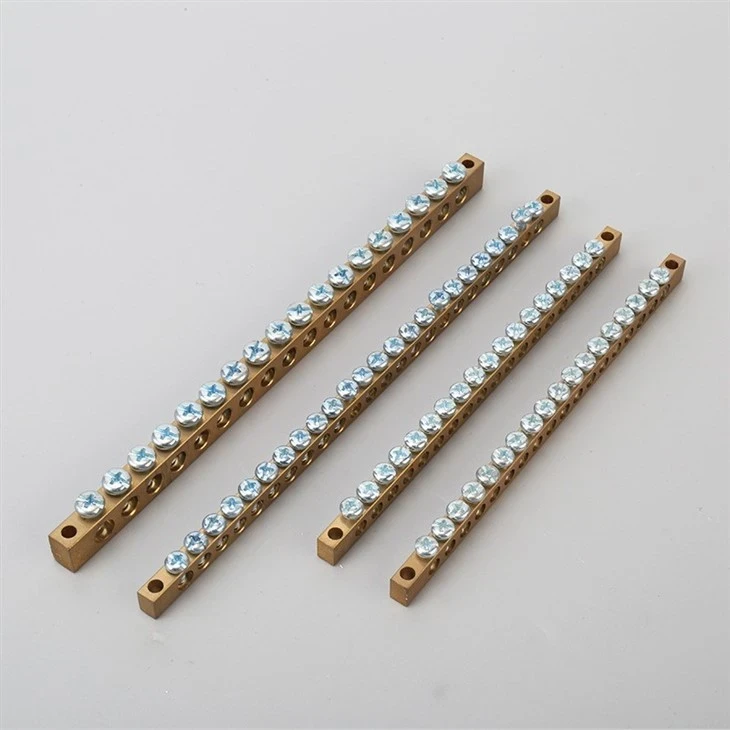
Products Description
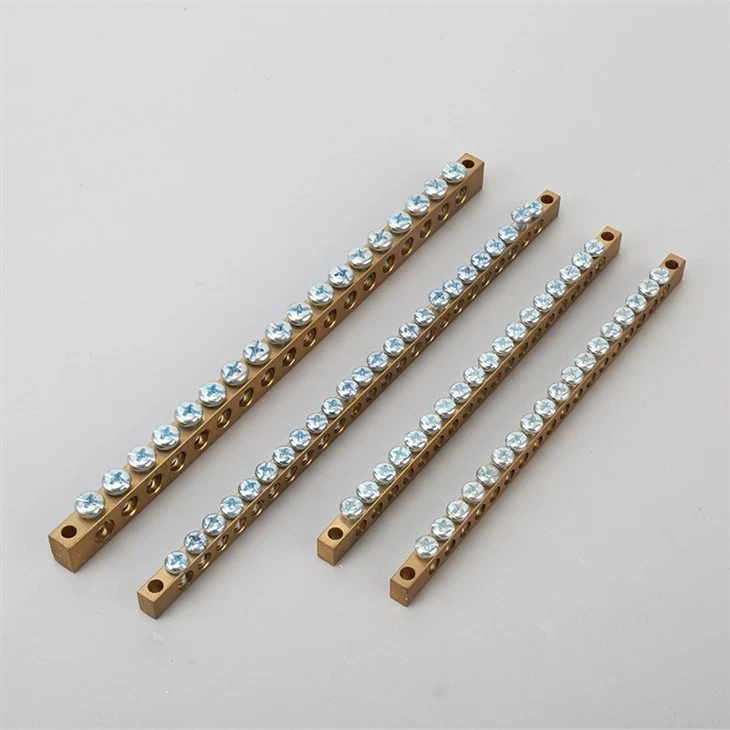
What Is This Component?
A copper bonding bar provides one common conductive path for multiple protective conductors inside an electrical installation.
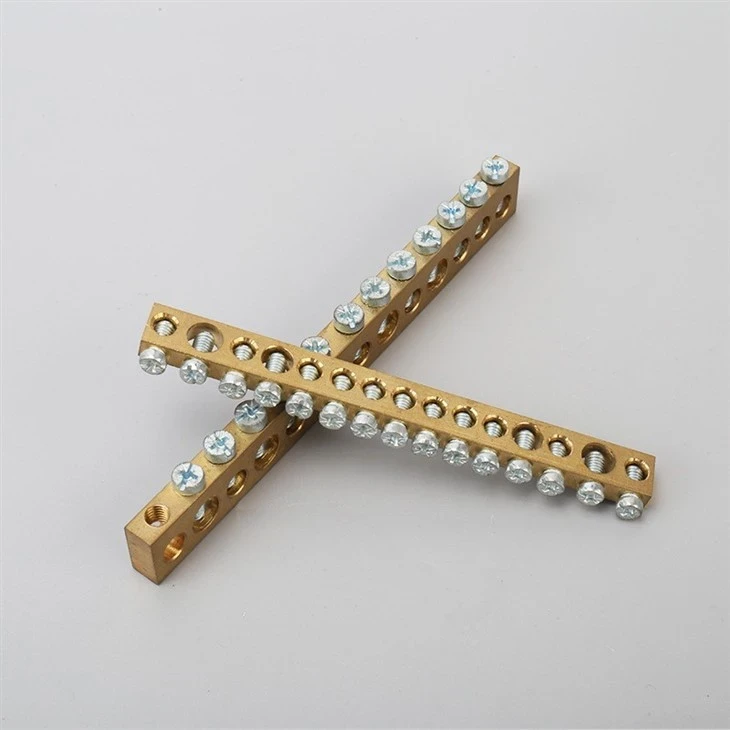
Small outgoing wires are secured through individual screw positions along the bar. Selected versions may also include larger end connections for an incoming cable, stud terminal or main bonding conductor.
The layout can be adapted to the enclosure rather than forcing the panel designer to use a fixed stock length.
| Design Element | Project Choice |
|---|---|
| Connection Positions | Required number of outgoing conductors |
| Main Connection | Large hole, threaded stud or compression point |
| Small Cable Entries | Same diameter or mixed diameters |
| Hole Spacing | Equal pitch or drawing-specific layout |
| Mounting Points | End holes, central holes or insulated support |
| Overall Length | Matched to enclosure space |
| Screw Arrangement | Top clamping or specified direction |
| Checkpoint | Acceptance Basis |
| Bar Length | Approved dimensional drawing |
| Connection Count | Purchase specification |
| Hole Diameter | Cable and terminal dimensions |
| Hole Pitch | Panel wiring layout |
| Thread Quality | Specified screw engagement |
| Main Connection | Incoming conductor arrangement |
| Surface Condition | Agreed bare or plated finish |
| Edge Condition | No harmful burrs around wire entries |
Suitable Projects
Electrical distribution panels
Control cabinets
Equipment grounding systems
Equipotential bonding assemblies
Industrial enclosure wiring
Neutral-link arrangements
Machinery electrical boxes
Copper Bar Layout
A project may request
18 outgoing connection positions
Two larger incoming connections
Equal cable-hole spacing
Tinned copper surface
End mounting holes
Customer-defined overall length
This configuration is only an example. Production follows the approved project drawing.
Why Copper?
Copper is selected where high electrical conductivity and stable contact performance are important. The correct copper grade, bar cross-section and surface condition should be defined by the electrical designer.
Bare copper, tinned copper and other finishes may be considered according to the installation environment. Surface finish must be agreed before production because it affects appearance, oxidation behavior and contact preparation
Custom Copper Equipotential Bonding Bar | Request a Quote
Electrical Design Note
The finished assembly's allowable current and fault-current performance cannot be determined from appearance alone. Copper cross-section, conductor size, contact pressure, screw torque, temperature rise and enclosure conditions must be evaluated as one electrical system.
Data Needed for a Quote
Send the required connection count, copper grade, bar cross-section, small and large cable-hole sizes, center spacing, mounting arrangement, screw specification, surface finish and order quantity.
Inquiry Message
Share your panel layout or existing bonding-bar sample, and we will review the copper bar dimensions and connection pattern.
Hot Tags: copper equipotential bonding bar, China copper equipotential bonding bar manufacturers, suppliers, factory