




Product Overview
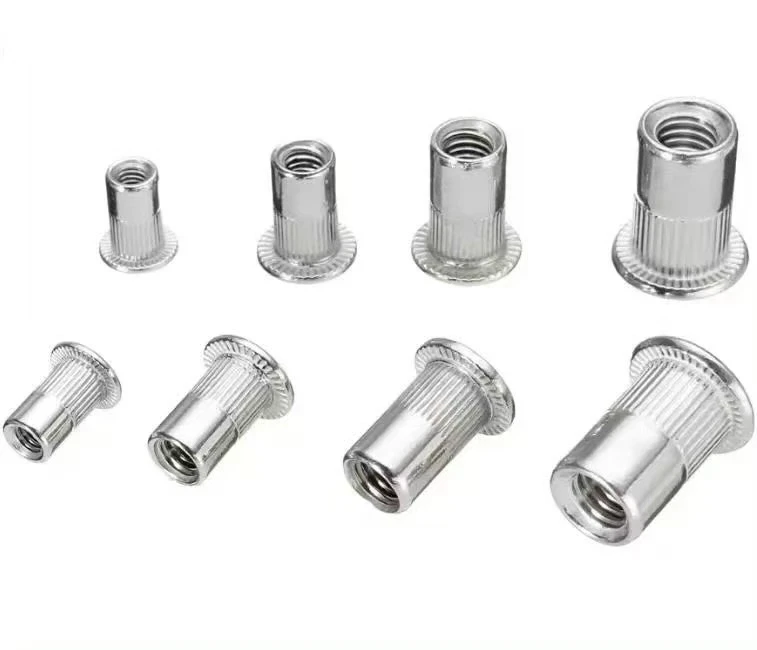
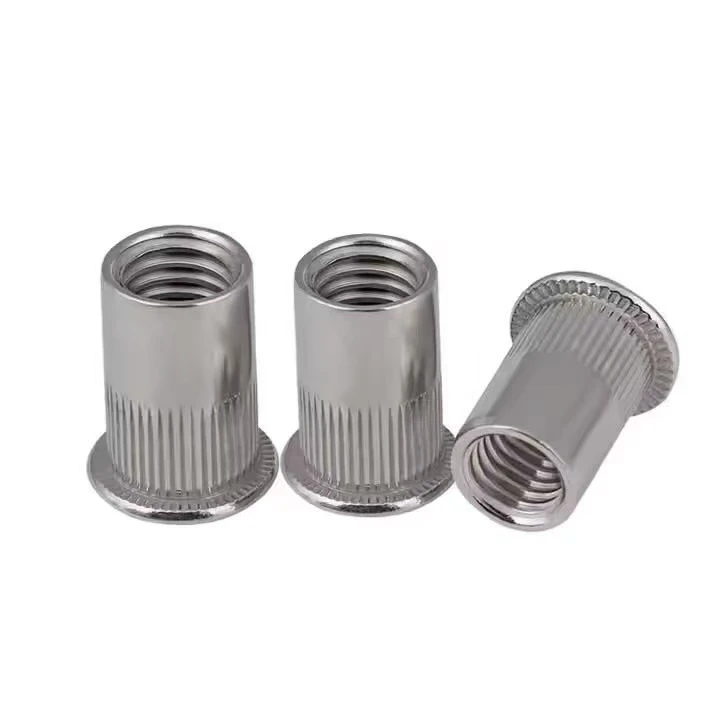
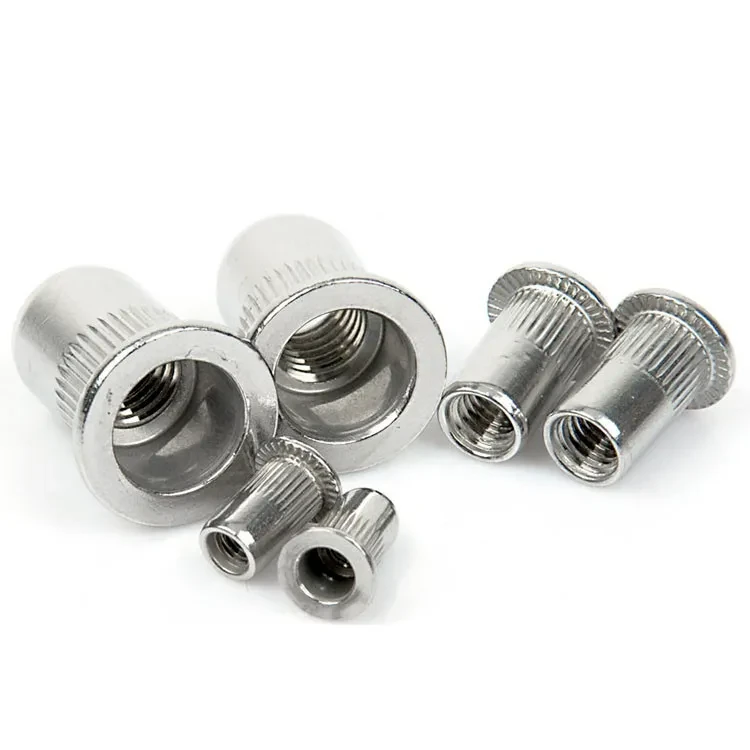
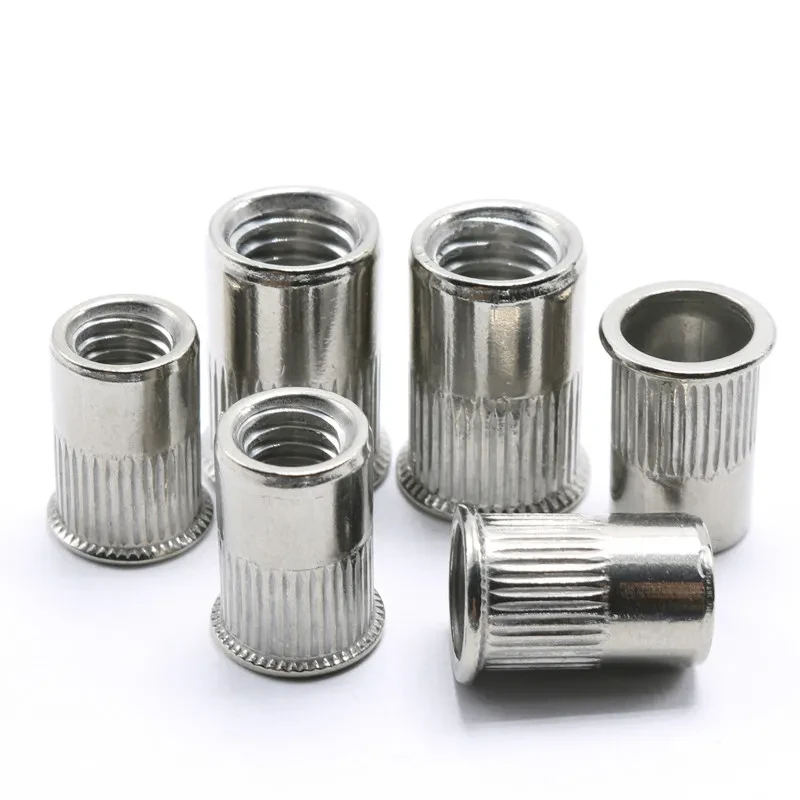
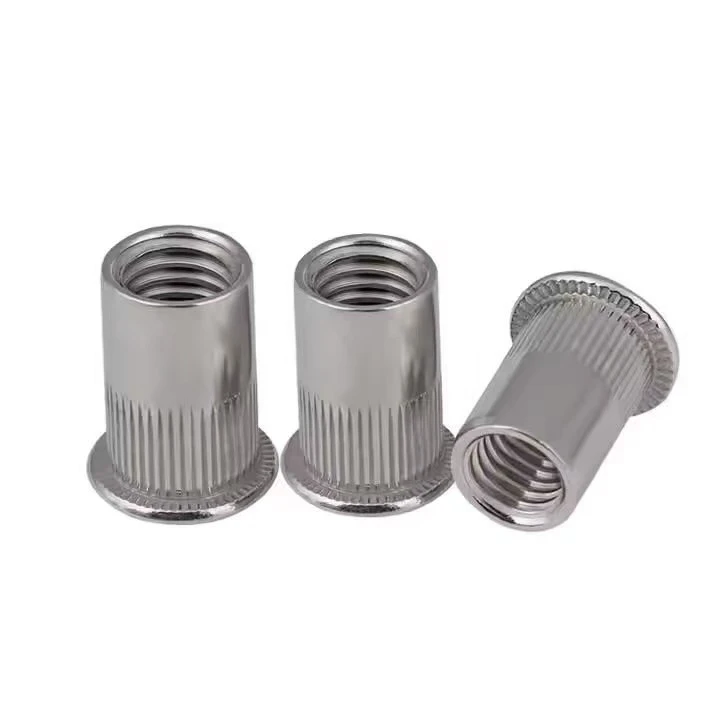
Blind rivet nuts are threaded inserts that put a load-bearing machine thread into sheet metal too thin to be tapped - set entirely from one side of the panel with a riveting tool, so no access to the back is ever required.
Where a closed profile rules out a back-side nut, where a weld would pull the panel out of shape or burn the coating off, and where the wall carries no cut thread, the insert answers all three: the tool pulls the shank, an unthreaded section collapses into a bulge on the blind side, and the sheet is clamped between that bulge and the flange. The panel stays flat, the coating stays intact, and a standard bolt goes straight in.
Technical Specifications
The table lists the range as it is ordered; asterisked rows carry range-wide figures.
| Item | Specification |
|---|---|
| Function | Riveted threaded insert creating a reusable machine thread in thin sheet, installed from one side |
| Thread Range* | M3 to M12 |
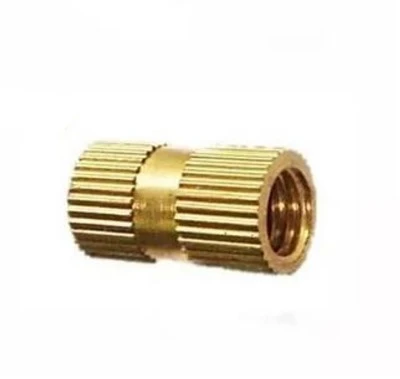
| Body Styles | Round knurled, half hex, full hex, slotted or plain; open-end or closed-end |
| Head Styles | Standard flat, low-profile reduced, heavy-duty large flange, sealed |
| Sheet Thickness* | Typically 0.5 to 3.0 mm, grip range set by body style |
| Anti-Rotation | Knurled or hex body keyed into the mounting hole |
| Installation | Single-sided setting with a hand, pneumatic or hydraulic riveting tool |
| Coated Panels | Supported - cold setting, no weld heat, no masking of threads |
| Base Material* | Carbon steel, stainless steel, aluminium |
| Finish* | Zinc plated with clear or blue passivation; other coatings per drawing |
| Customization | Thread, body, head and grip range produced to drawing; OEM and ODM available |
| MOQ | Negotiable, set by specification and order quantity |
| Quality Guarantee* | 12 to 24 months, counted from the shipment date |
| Manufacturing Standard* | ISO 9001 quality management system |
| Packaging* | Standard export packaging |
| Delivery Ports* | Ningbo Port / Shanghai Port |
| Quote Turnaround | Within 24 hours of receiving the enquiry |
* Asterisked rows are range-wide figures shared across the fastener lines on this site. Specification-specific values are stated on the datasheet issued with each quotation.
Core Advantages
Four points where the insert changes what a thin-sheet line can do.
Set From One Side Of The Sheet
The riveting tool needs room on the front face only, so closed box sections, channels and double walls become usable fixing points.
Knurled And Hex Bodies Hold Torque
The knurl or the hex flats key into the hole and lock the body against spin-out under high tightening torque.
No Weld, No Distortion
The blind-side bulge forms cold. The panel stays flat and the paint or coating around the joint is never exposed to weld heat.
A Thread Built For Repeat Service
A full machine thread takes scheduled maintenance cycles, where a tapped edge in thin sheet strips on the first overhaul.
Riveted Threaded Inserts vs Welded Nuts And Tapped Threads
The two methods this insert replaces, side by side on the points that decide the process.
| What Changes | Riveted Insert | Welded-On Nut | Threads Tapped In Thin Sheet |
|---|---|---|---|
| Sheet thickness | Works in thin-gauge sheet | Heat distorts thin panels | Wall too thin to hold a thread |
| Coating survival | Set after painting, unharmed | Burned by the weld | Chips and burrs at the bore |
| Panel distortion | Cold bulge, panel stays flat | Weld shrinkage pulls the panel | None |
| Thread life | Machine thread, repeat service | Good | Strips with repeated assembly |
| Equipment per hole | One riveting tool | Welder plus finishing rework | Tapping setup and taps |
Material & Surface Treatment Options
Three base metals and one standard finish cover the range; the mix is settled at the drawing stage.
Steel, Stainless Or Aluminium
Carbon steel carries the general load cases at the lowest cost; stainless steel takes washdown, weather and vehicle underbody exposure; aluminium suits weight-sensitive builds and aluminium panels where contact corrosion matters.
Zinc Plating, And What Follows
Steel bodies ship zinc plated with clear or blue passivation as standard; plating thickness and other coatings follow the drawing, and stainless bodies are supplied passivated.
Application Scenarios
Where a thread is needed and the back of the sheet is out of reach.
Enclosures, Cabinets And Control Panels
Cabinet makers add earth studs, rail fixings and component mount points to painted sheet without a weld-and-rework loop.
Vehicle Bodies And Commercial Equipment
Body shops fix trim, brackets and harness clips inside box sections that no hand or tool can reach from behind.
Thin-Walled Structures And Tubular Frames
HVAC housings, appliances and tubular furniture gain strong threads in walls too thin for any cut thread.
Frequently Asked Questions
Q: How does the insert stay in the sheet?
A: The setting tool pulls the threaded shank, and the unthreaded section collapses outward into a bulge on the blind side. That bulge clamps the sheet against the flange while the internal threads are left untouched.
Q: Can it be installed after the panel is painted?
A: Yes. Setting is cold work, so coatings survive and nothing needs masking - the insert goes into the finished, coated panel as the last step.
Q: Which body stops the insert turning under torque?
A: The knurled round body and the hex body. Both key into the mounting hole; for assemblies tightened to high torque they are the configurations we recommend.
Q: What is needed for a quotation?
A: Send the drawing, or the thread size, body style, material and quantity, and the quotation comes back within 24 hours. A pre-production sample is made for approval before mass production starts.
Hot Tags: blind rivet nuts, China blind rivet nuts manufacturers, suppliers, factory